The Research
Curiosity without credulity. For every experiment, I’ll show you what I tried, what I measured and what I experienced, and I’ll keep those three things separate.
The instruments
 01
01Everything in one place.
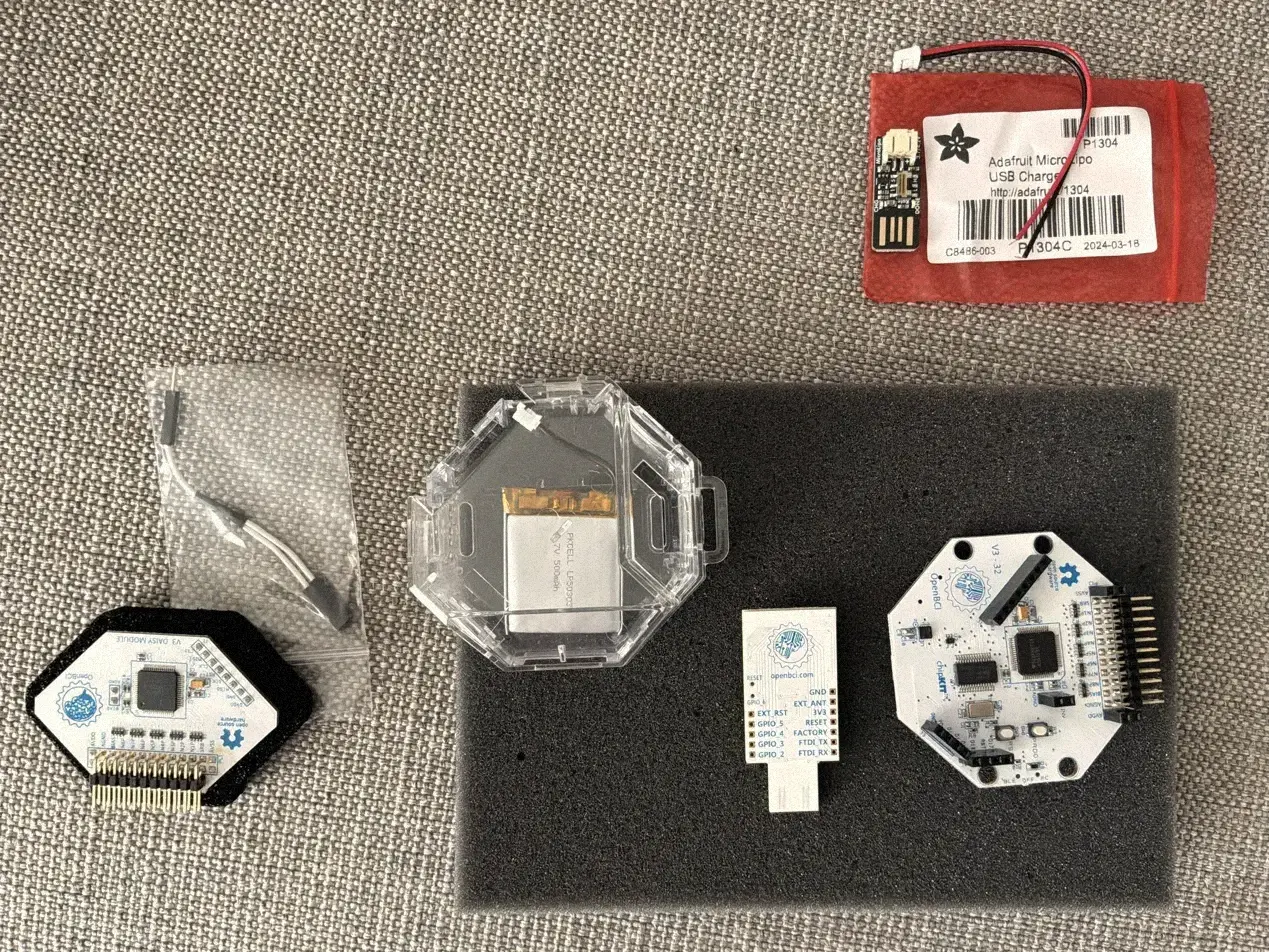
This is the lab before it became a lab: the boards, the radio, the battery and the cables that will show what my brain and body are doing during each experiment.
 02
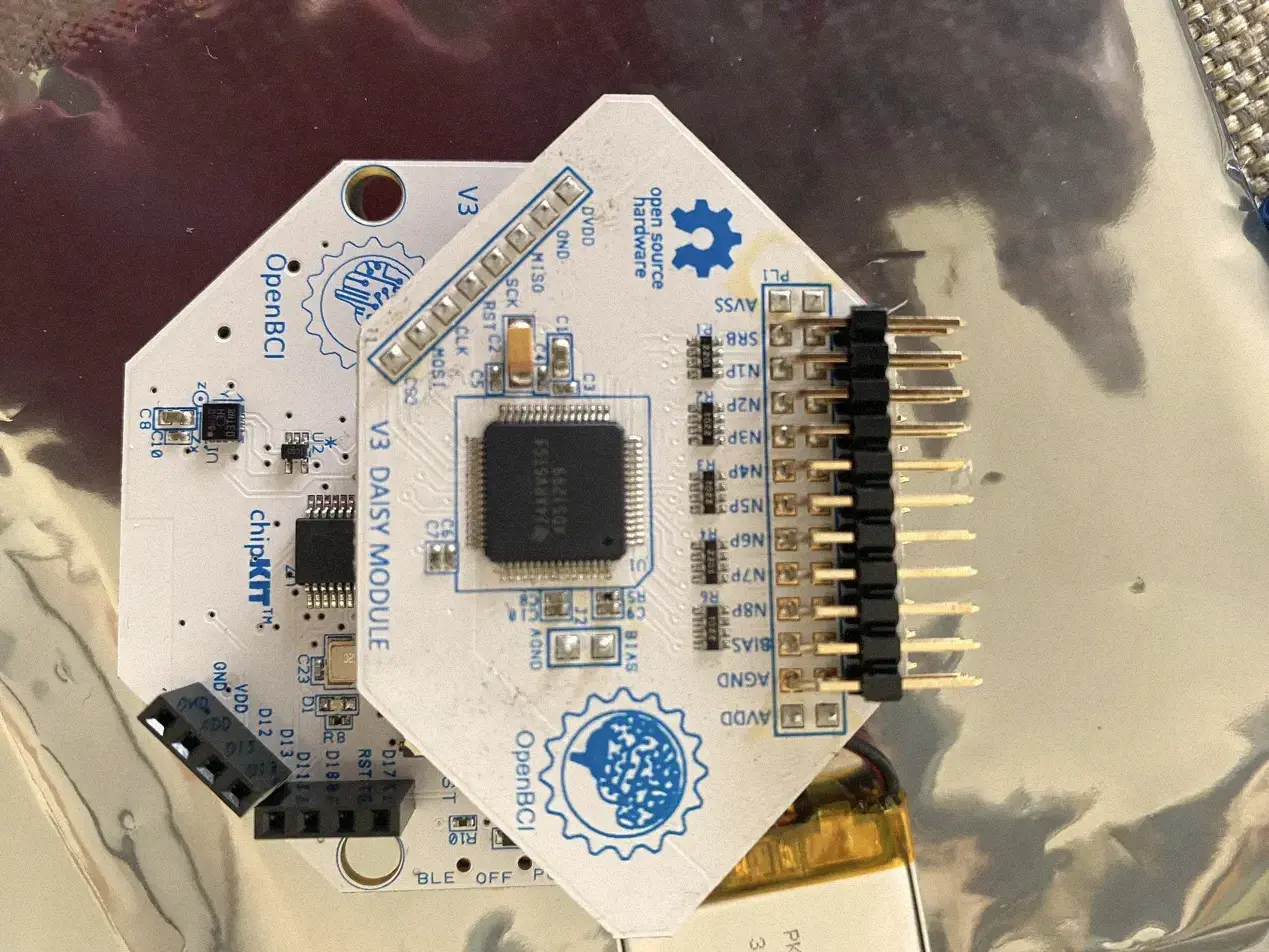
02The brain boards.
Two stacked circuit boards from OpenBCI, an open-source system used by researchers around the world. Together they record 16 channels of brain activity at once, sampling each one more than a hundred times a second.
 03
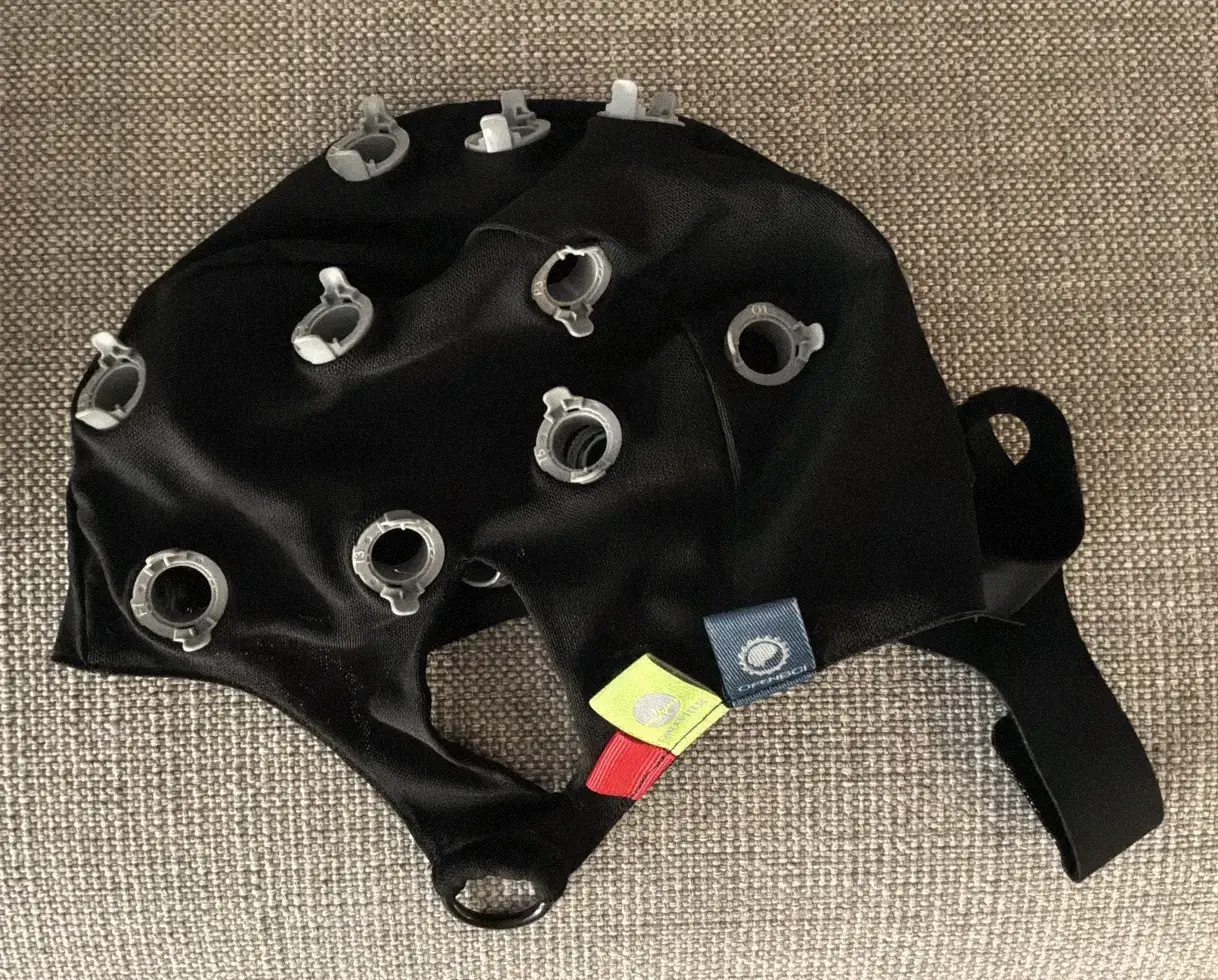
03The cap.
A soft cap with holders at standard positions across the scalp, the same international layout used in EEG research. Each holder takes a small sponge soaked in salt water, so there’s no messy gel, which makes it practical to do this week after week.
 04
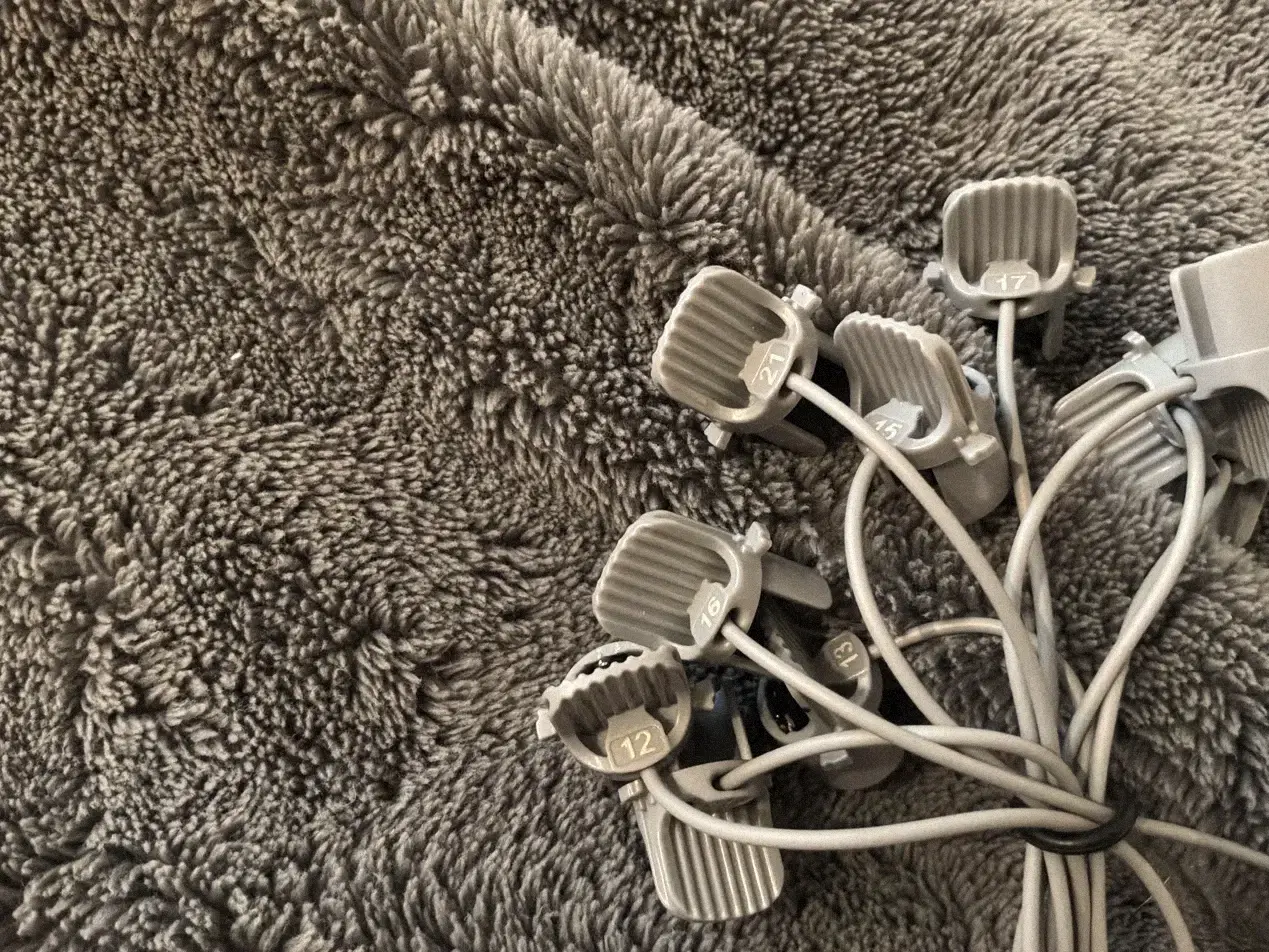
04The sensors.
Each numbered holder sits over a different region of the brain: the front for attention and planning, the sides for sound and language, the back for vision. The numbers are how I keep all 16 straight.
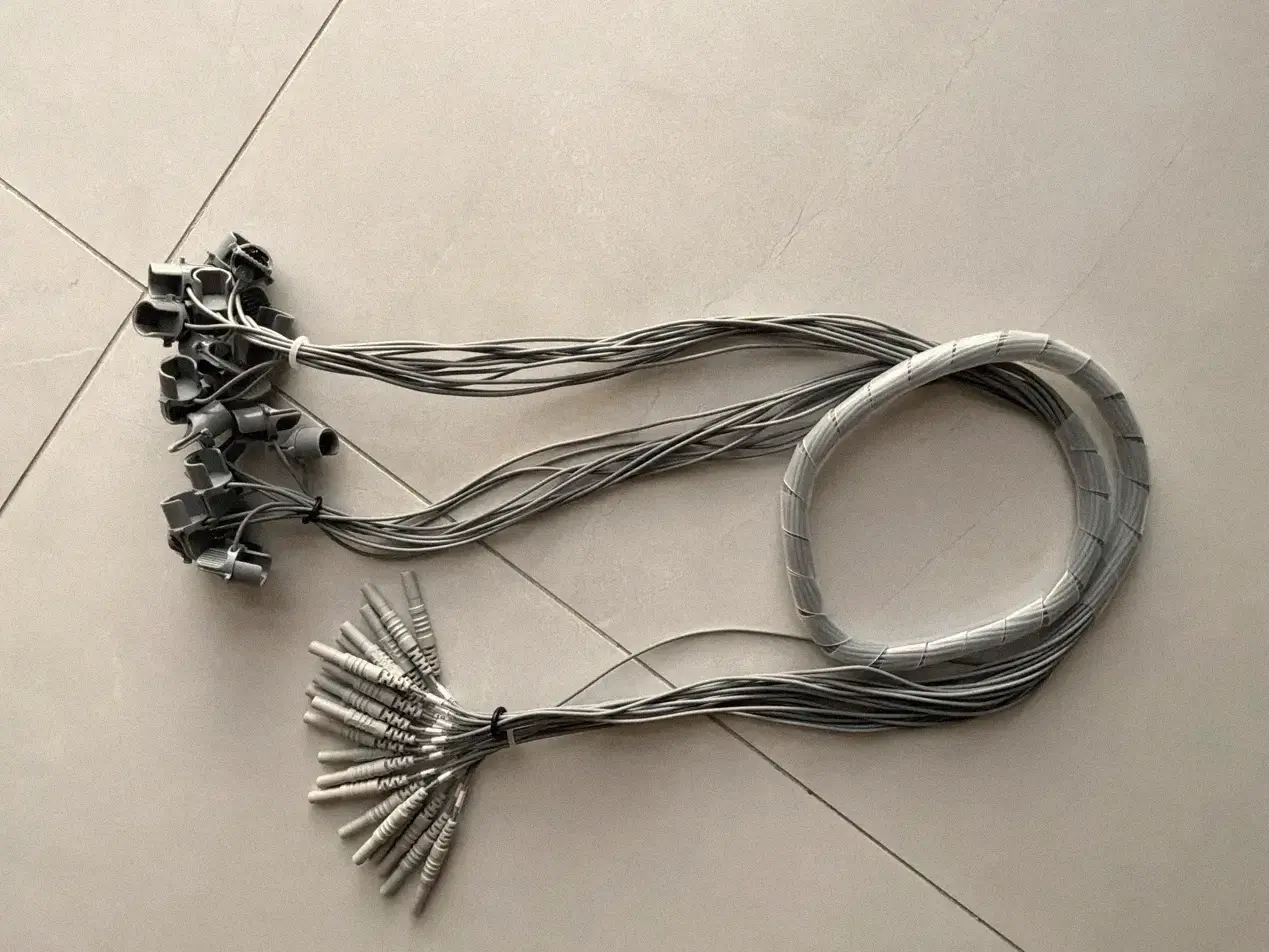 05
05The wires.
Brain signals are tiny, measured in millionths of a volt. These leads carry them from each sensor to the boards without adding noise.
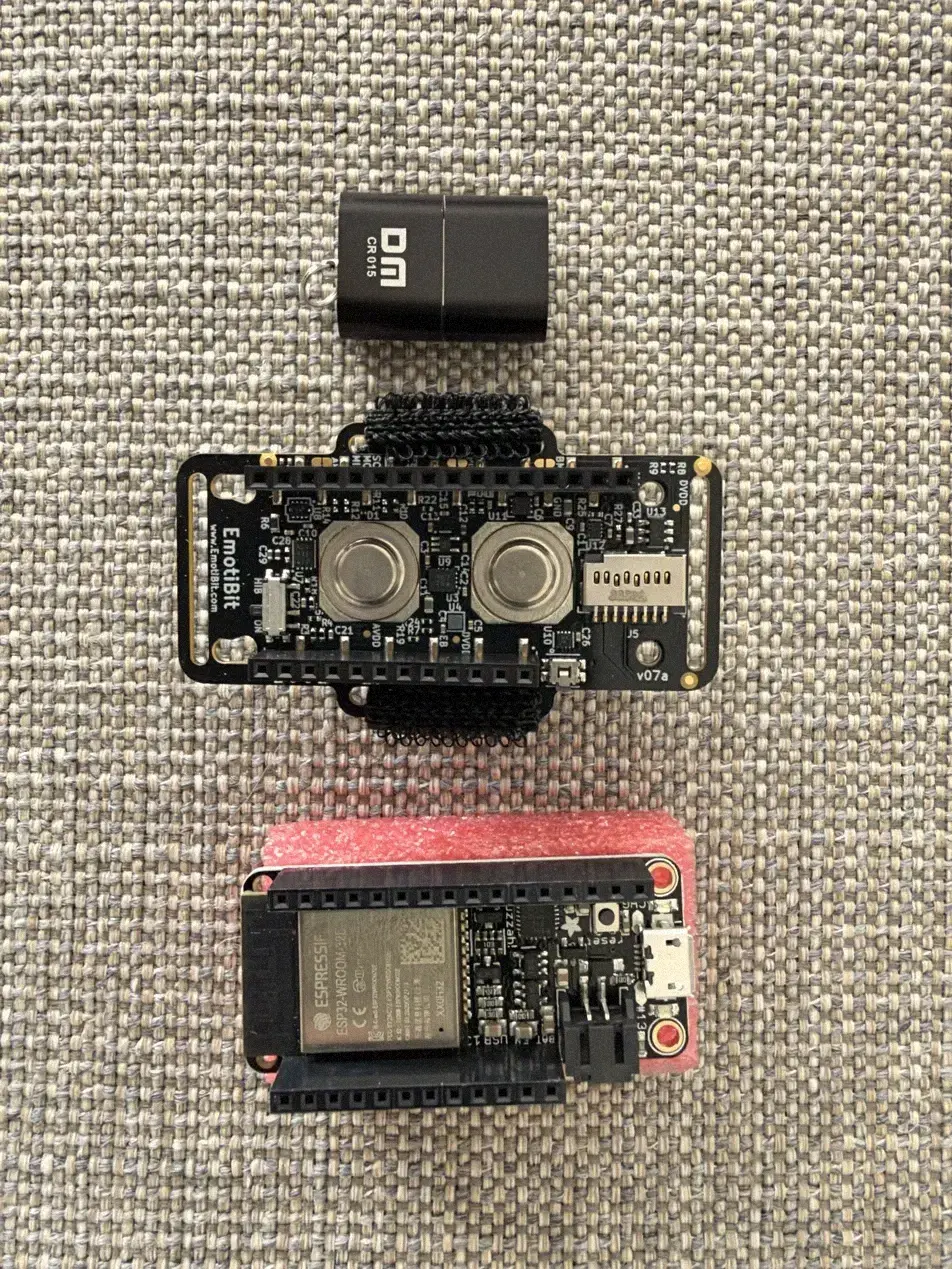 06
06The body sensor.
EmotiBit, worn on the arm, tracks what the brain can’t show on its own: heart rate and its rhythm, skin response (a signal of arousal and stress), skin temperature and movement.
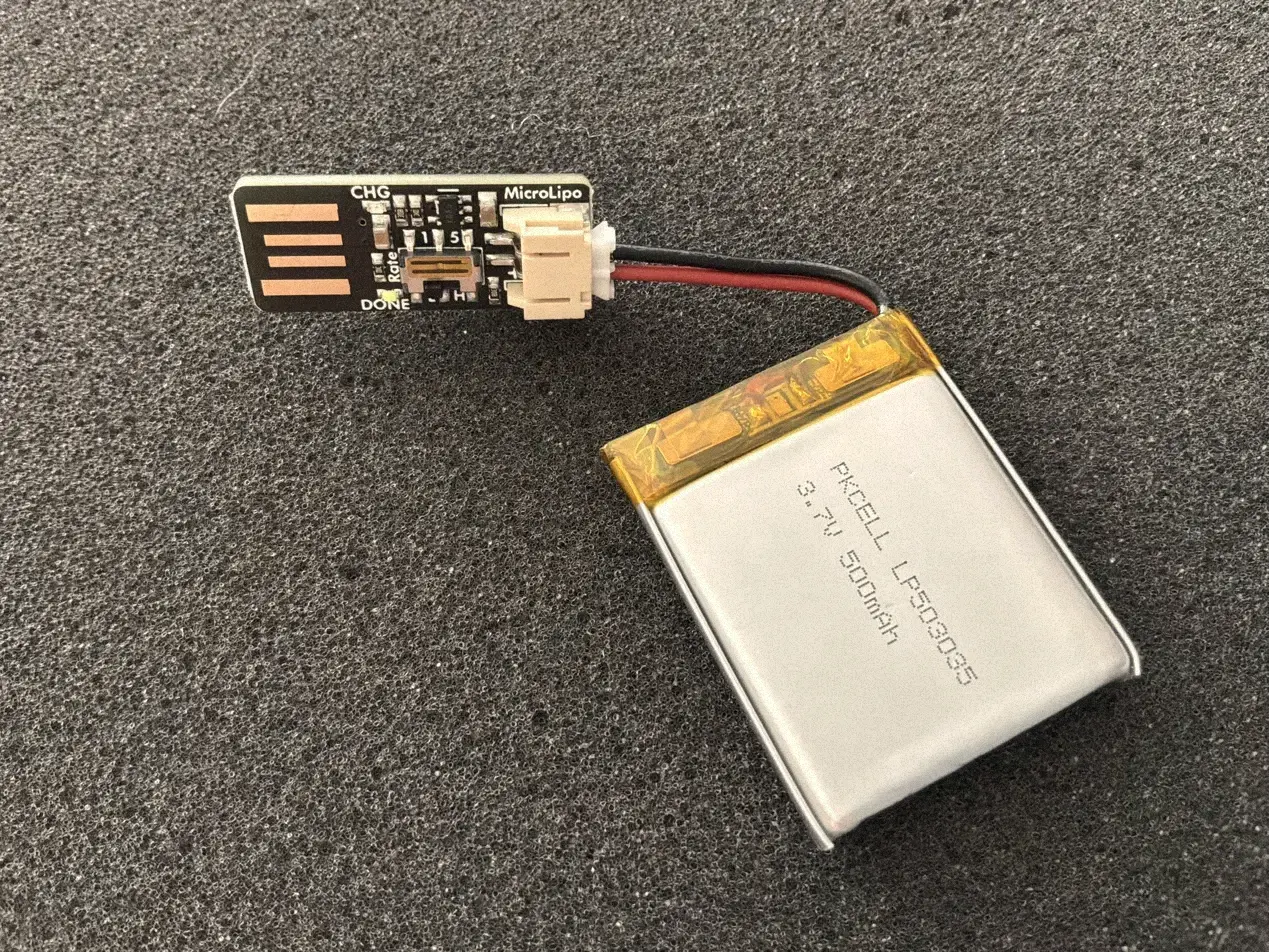 07
07The power.
A small rechargeable battery runs the brain boards, keeping them off wall power. That cuts electrical noise and keeps the setup safe.
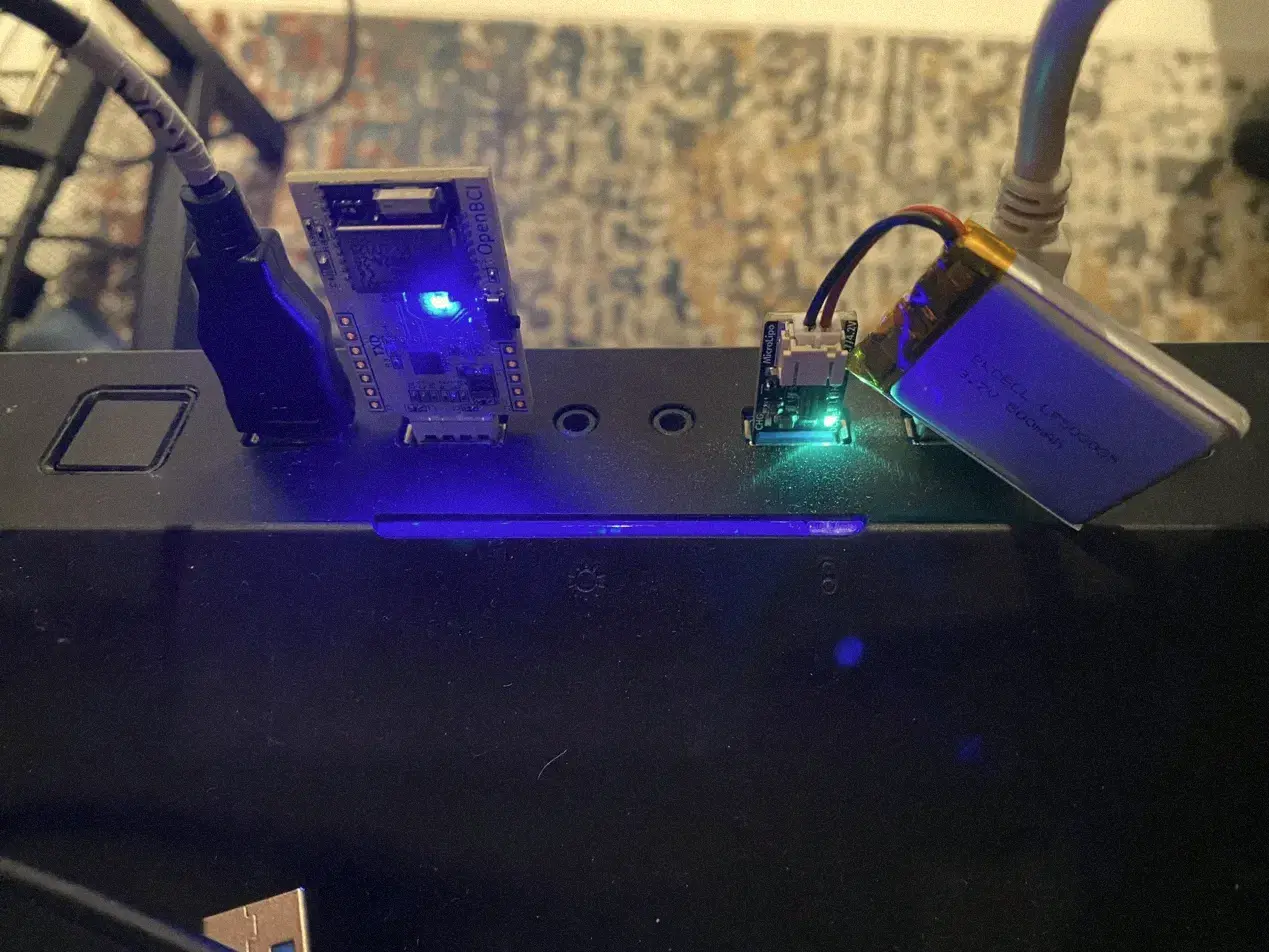 08
08First signal.
The radio receiver plugged into my computer, glowing blue, streaming 16 live channels of brain data for the first time. Everything before this was a box of parts.
Turn the head to see where each sensor sits. As the year goes on, this is where real session data will appear.
The software
Recording is the easy part. The real work is turning a year of sessions into something honest and understandable. Here’s the system I’m building.
- 1
In development
Run the session
One button starts everything, marks key moments, and logs exactly what I’m listening to. For blind tests, the software hides which condition is playing, even from me.
- 2
In development
Capture it together
Brain signals, body signals, audio and video land on one shared timeline, so every moment can be compared across all of them.
- 3
Part of every session
Report before data
Right after each session, I record what I experienced before I look at a single chart, so the data can’t shape the story.
- 4
Planned
Analyze across the year
AI-assisted analysis looks at each session and at the whole year: are certain states getting easier to reach, do my reports and my physiology agree, which practices look no different from resting?
- 5
Planned
Share what I find
Results appear here and in every episode, with the numbers coming only from real recordings.
Illustrative preview · Real data appears after the first sessions
The year
Week 1 of 52
Sessions logged
0
The first session hasn’t happened yet.
16 channels
Across the year Sample line, not data
What I experienced
Written right after each session, before I see any data.
What the data shows
Appears here once there are real recordings.
Exploring Human Potential is run by one person, with help. I work with Claude, an AI from Anthropic, as a chief of staff and technical partner. Claude Code builds and maintains this website and is building the session software described above. We’re also developing a persistent operating system for the project that keeps track of every experiment, decision and open question across the whole year, so nothing gets lost between sessions. The AI helps organize, analyze and build. The experiences, the interpretation and the final word are mine.
- Blind tests wherever possible.
- Every result shown, including the disappointing ones.
- My report comes before the data.
- No sponsor influences a conclusion.
- AI-generated visuals may illustrate an experience but are always labeled and never presented as evidence.
None of this is a medical device, and I’m not a neuroscientist. These tools show what my brain and body are doing. They can’t prove what an experience means.
Low-risk methods, mostly sound. No electrical or magnetic brain stimulation.